Factories engaged in oral medical device manufacturing widely apply UV curing, ozone disinfection & sterilization, as well as plasma and corona treatment on production lines. All these three types of equipment generate ozone, making ozone removal filter tubes (ozone decomposition filters) essential facilities.

Detailed Application Scenarios
1. UV Curing Machines (Main ozone source)
Most dentures and orthodontic appliances are made of resin and light-curing materials, which need short-wave ultraviolet light (below 210 nm) for curing.
Short-wave UV rays convert oxygen in the air into ozone.
Built-in fans blow ozone out into workshops. High-concentration ozone causes pungent smell, damages human respiratory tracts and corrodes precision parts.
Compliant solution: Install ozone removal filter tubes at air outlets and exhaust pipes to decompose ozone into oxygen.
2. Ozone Sterilization Cabinets & Disinfection Equipment (Direct ozone utilization)
Sterilization is a necessary process for medical devices. Ozone sterilization is commonly used thanks to its eco-friendliness and zero residue, better than ethylene oxide sterilization.
Residual ozone stays inside equipment chambers and exhaust gas after sterilization.
Direct discharge will result in excessive pollutant emissions and bring health hazards to on-site workers.
It is necessary to fit ozone removal filter tubes at exhaust ends to achieve standard-compliant discharge.
3. Plasma & Corona Surface Treatment (For better adhesion performance)
Plasma cleaning and high-voltage corona treatment are adopted for dentures, abutments and orthodontic appliances to activate surfaces and improve adhesion of coatings and resin materials.
Ozone is produced as a by-product during high-voltage air ionization.
Exhaust gas from such equipment also requires ozone removal filter tubes for purification.
4. Advantages of filter tubes over ordinary filters
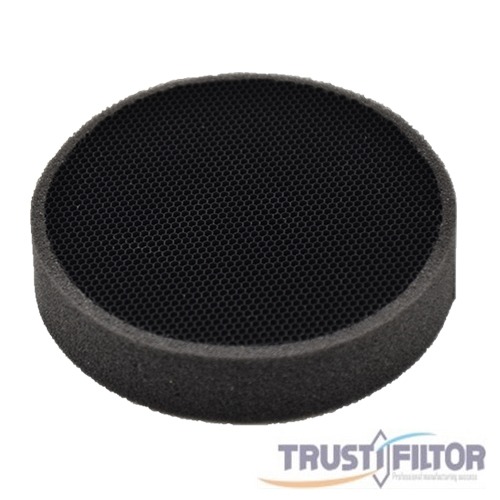
Production lines adopt ducted centralized exhaust systems, so tubular and cartridge filter tubes filled with honeycomb activated carbon and ozone decomposition catalysts are adopted.
They can quickly decompose ozone into oxygen at room temperature with no secondary pollution.
Core Application Purposes
- Protect workers: Ozone irritates eyes, nose and respiratory systems, and causes lung damage after long-term exposure.
- Protect precision equipment and finished products: Ozone features strong oxidizing property, which corrodes metals, rubber accessories and electronic components.
- Meet environmental protection regulations: Strict waste gas emission standards require professional ozone treatment.
Summary
Oral medical device factories widely use UV curing, ozone sterilization, plasma and corona treatment processes, all of which produce ozone. To guarantee staff safety, avoid equipment corrosion and satisfy environmental emission requirements, ozone removal filter tubes must be installed in exhaust pipelines.
 Types and characteristics of air purifier filters
 Introduction to microporous aluminum honeycomb core
 What operations should be avoided to control ozone in copiers
 Common ways to filter ozone